Article Summary:
- Board packs are the collection of documents sent to board members before meetings to help them prepare and make informed decisions
- Well-prepared packs arrive 5-7 days before meetings and include agendas, financial reports, CEO updates, and strategic papers
- Digital formats now replace paper packs in most organizations, offering better security, faster distribution, and easier updates
- Clear structure, consistent formatting, and executive summaries make packs easier to review and more useful
- Good preparation saves meeting time, improves decision quality, and demonstrates professional governance standards
Board meetings only work well when directors arrive prepared. They need time to review information, ask questions, and think through decisions before they gather.
Board packs serve this purpose. They contain all the documents board members need to understand what’s happening in the organization and what decisions require their attention.
This guide walks through how to create board packs that directors actually read and use – from what to include to how to organize and distribute them effectively.
What Board Packs Include?
Board meeting packs typically contain several standard documents plus any materials specific to that meeting’s agenda.
The basic components appear in most packs:
Standard documents:
- Meeting agenda with timings
- Minutes from the previous meeting
- CEO report on operations
- Financial statements and variance analysis
- Committee reports (audit, risk, remuneration)
- Strategic updates or project status reports
- Papers for specific decisions
Decision papers need the most work. Each one should clearly explain what decision the board needs to make, why it matters, what options exist, and what management recommends.
Understanding what to include in an executive summary helps you create decision papers that get to the point quickly.
| Document Type | Purpose | Typical Length |
| Agenda | Shows meeting flow and time allocation | 1-2 pages |
| CEO Report | Updates on operations and key issues | 2-4 pages |
| Financial Report | Current financial position vs budget/forecast | 3-5 pages |
| Committee Reports | Updates from board committees | 1-2 pages each |
| Decision Papers | Specific proposals requiring approval | 3-6 pages each |
| Supporting Materials | Background data, detailed analysis | Varies |
From our work with boards across different sectors, the packs that work best have a clear structure that stays consistent from meeting to meeting. Directors know where to find information quickly.
Plan Your Timeline
Good board packs preparation starts weeks before the actual meeting. You need time to collect information, review drafts, and give directors adequate review time.
Typical preparation timeline:
| Timeline | Activity | Who’s Responsible |
| 3-4 weeks before | Request content from executives and committees | Company secretary |
| 2-3 weeks before | First drafts submitted by contributors | Report authors |
| 10-14 days before | Review and edit all materials | Company secretary + Chair |
| 7-10 days before | Final pack distributed to board | Company secretary |
| Meeting day | Directors arrive prepared to discuss | Board members |
Seven days gives directors enough time to read materials properly. Some organizations go with five days for routine meetings, but anything less makes it hard for directors to do their job well.
The relationship between preparation time and meeting quality connects directly to overall board effectiveness, which is why governance experts emphasize adequate review periods.
Structure the Pack Clearly
How you organize information matters as much as what you include. Directors should find what they need without hunting through dozens of pages.
Standard pack structure:
- Cover page – Meeting date, location, pack version number
- Table of contents – Page numbers for each section
- Agenda – With clear time allocations
- Previous minutes – For approval
- Standing reports – CEO, CFO, committee updates
- Decision papers – Items requiring board approval
- Information items – For awareness only
- Appendices – Detailed supporting data
Each section should start on a new page with a clear header. Number pages consecutively through the entire pack so references work correctly.
Write Executive Summaries
Directors are busy. They need to understand the key points quickly before they dive into details.
Every report longer than two pages needs an executive summary at the start. Keep these summaries to one page maximum.
What good summaries include:
| Element | What to Cover | Length |
| Context | Why this matters now | 1-2 sentences |
| Key Points | Main findings or issues | 3-5 bullet points |
| Financial Impact | Cost or revenue implications | 1-2 sentences |
| Decision Required | What the board needs to approve | 1 sentence |
| Recommendation | What management suggests | 1 sentence |
Write summaries after you finish the full report. This ensures they accurately reflect the complete content.
For papers that require formal approval, the summary should state exactly what resolution the board needs to pass.
Use Visual Elements
Numbers in tables are easier to scan than numbers buried in paragraphs. Trends show up clearly in simple charts.
When to use visuals:
- Tables for comparing options, showing financial data, or listing multiple items
- Charts for trends over time, budget vs actual comparisons, or progress toward goals
- Diagrams for organizational structures, process flows, or relationships between elements
Keep visuals simple. Directors need to understand them in seconds, not minutes.
Label everything clearly. Every table needs a title. Every chart needs axis labels. Every diagram needs a key if it uses symbols or colors.

Choose Between Paper and Digital
Most organizations now use digital board packs instead of paper. The benefits usually outweigh the transition effort.
| Format | Advantages | Disadvantages |
| Paper Packs | Familiar, no technology needed, easy to annotate | Expensive to print/ship, hard to update, security risks, storage issues |
| Digital Packs | Lower cost, instant distribution, easy updates, better security | Requires devices and training, some directors prefer paper |
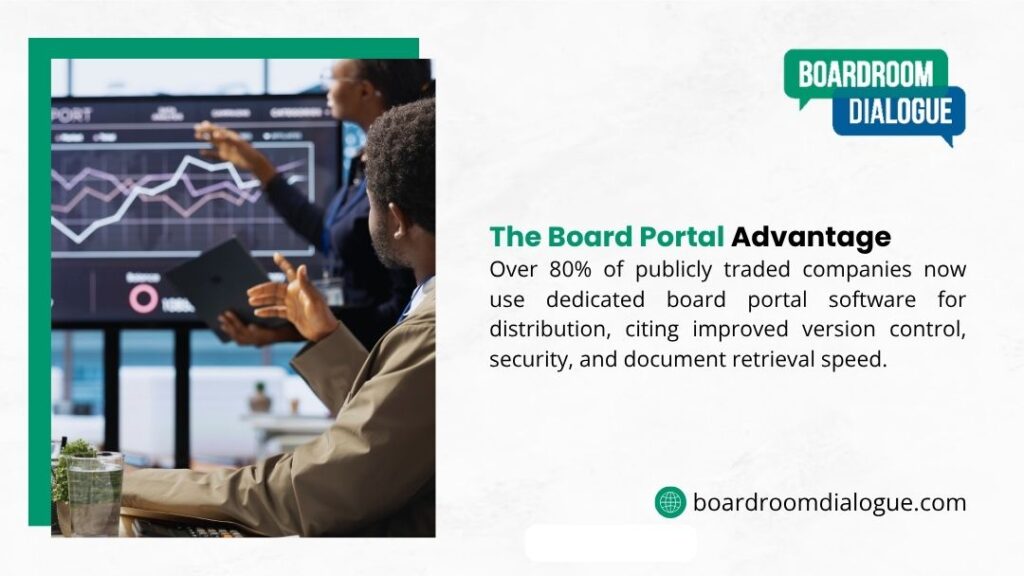
| Board Portal Software | All digital benefits plus collaboration tools, version control, audit trails | Subscription costs, setup time, ongoing administration |
Electronic board packs sent as PDF attachments work for small boards or those just starting the digital transition. Purpose-built board packs software makes sense for larger boards or those that meet frequently.
Digital formats also support better governance by creating audit trails that show who accessed what information and when.
The shift to board papers in digital format accelerated significantly after 2020, when remote meetings became common and boards needed secure ways to share sensitive information online.
Maintain Security
Board packs contain confidential information – financial results before public release, strategic plans, personnel matters, acquisition targets.
Security measures for board packs distribution:
| Method | Security Level | When to Use |
| Password-protected PDFs | Basic | Small boards, low-sensitivity content |
| Encrypted email | Moderate | Standard business matters |
| Board portal with login | High | Most board materials |
| Portal with two-factor authentication | Very high | Highly sensitive matters |
Never send board packs through regular email without encryption or password protection. The risk of accidental disclosure is too high.
If you use a board portal, set documents to expire after the meeting. This prevents old versions from circulating and reduces the chance of outdated information causing confusion.
Review and Quality Check
Before you send the pack, check it thoroughly. Mistakes in board materials damage credibility.
Quality checklist:
- All page numbers correct in table of contents
- No obvious typos or grammatical errors
- All financial calculations verified
- Charts and tables have clear labels
- Executive summaries match full reports
- All internal references (see page X) are accurate
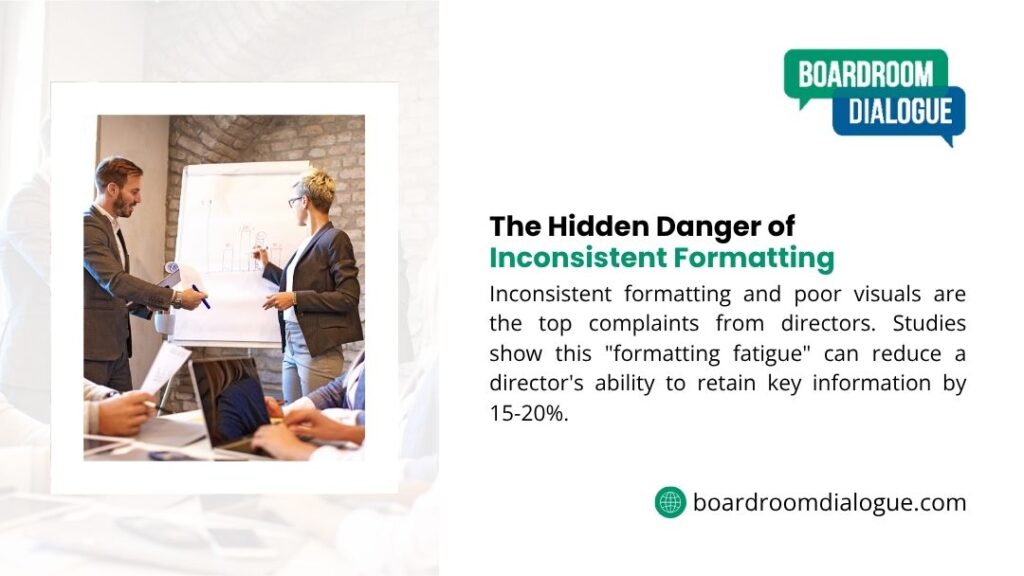
- Consistent formatting throughout
- All required signatures present on minutes
Have someone who didn’t write the content review it with fresh eyes. They catch errors that authors miss because they’re too familiar with the material.
In our experience with board administration, a systematic review process catches about 80% of potential problems before directors see them.
Distribute the Pack
Send the pack to all board members at the same time. Directors should receive identical information simultaneously to avoid any appearance of favoritism or information advantage.
Distribution checklist:
- Confirm you have current email addresses or portal access for all directors
- Send a brief email notification when the pack is available
- Include the meeting date, time, and location in your message
- Note any items that require specific preparation or advance reading
- Provide contact information for questions
- Confirm receipt from all directors
For organizations with international boards, consider time zones when you schedule distribution. Aim for business hours in the location where most directors are based.
Follow up with any director who hasn’t confirmed receipt within 48 hours. Technical problems happen, and you want to catch them early.
Track and Improve
After each meeting, evaluate how well the pack worked. Did directors have what they needed? Did anything cause confusion? What took too long to review?
Ask for feedback regularly – maybe twice a year through a brief survey or informal conversation with the Chair.
This connects to broader board evaluation processes that help boards improve their overall performance over time.
Areas to track:
| Metric | What It Shows | Target |
| Days before meeting pack distributed | Preparation time provided | 7+ days |
| Pack length | Information volume | Under 150 pages for routine meetings |
| Time spent on pack-related questions in meeting | Clarity of materials | Under 10% of meeting time |
| Director satisfaction with pack quality | Overall usefulness | 4+ out of 5 rating |
Use this feedback to refine your process. Maybe your financial reports need more context. Maybe decision papers should lead with recommendations instead of background. Small changes compound over time.
Get Expert Support for Board Effectiveness
If your board wants to improve how it prepares materials and runs meetings, Boardroom Dialogue provides expert help with board effectiveness and how your board works.
Boardroom Dialogue works with boards to look at current processes, find what needs work, and make changes that lead to better meetings. This includes how boards prepare, send out, and use meeting materials.
The work covers both the practical side (like pack structure and timing) and the people side (like how directors read materials and take part in discussions).
Work with Boardroom Dialogue to make your board meetings more effective and improve decision quality.
Common Questions About Board Packs
How long should board packs be?
Most routine board packs run 80-120 pages. Special meetings for major decisions might reach 150-200 pages. Anything longer suggests you’re including too much detail or not using executive summaries effectively.
Can we send updates after distributing the pack?
Yes, but keep these minimal. Late additions suggest poor planning. If you must send updates, clearly mark them as supplementary materials and reference the original pack section they relate to.
What file format works best for digital packs?
PDF is the standard. It displays consistently across devices, directors can annotate it easily, and it’s harder to accidentally modify than Word documents. Use bookmarks in PDFs to help navigation.
Do all board members need identical packs?
Yes, with rare exceptions. Sometimes the Chair receives additional briefing materials, but all directors should get the same core pack to ensure equal information access.
How do we handle confidential items?
Mark them clearly as confidential and consider distributing them separately through higher-security channels. For extremely sensitive matters, provide materials only in the meeting room and collect them afterward.