Every board wants to make a real impact, but many get stuck in routine meetings, ticking boxes, and approving agendas without truly driving the organization forward.
A Board Effectiveness Review helps you with what’s working, what’s not, and where improvements are needed. It is more about giving your board the insights and tools to make better decisions, work more collaboratively, and make its strategic influence stronger.
In this article, you will learn what a board effectiveness review is, why it’s important and how it can help you strengthen your business board.
What Is a Board Effectiveness Review?
A board effectiveness review is a structured assessment that shows you how well your board is performing its job. This is more about the real work of strategy, oversights and decision-making.
The review examines three main areas:
There are three things that effective boards reviews examine:
- Board processes:
This is the part that tells you how you run meetings, handle information, and make decisions.
- Board dynamics:
This is the part that shows you how well directors work together, if everyone speaks up or a few people dominate, or if there is real debate or just polite agreement.
- Board impact:
A board’s work should truly benefit the organization by driving strategy and adding real value, not just ticking compliance boxes.
Most boards skip this kind of review because they assume they’re doing fine. But assumptions can be expensive when governance problems turn into business problems.
Why Does Your Board Need Regular Reviews?
Even the most experienced boards can gradually lose focus on how effectively they are guiding the organization. Regular reviews inform you with what is working and what is not working when it comes to strategies, statistics and decision-making processes.
Without having these reviews, your board might risk relying on assumptions about their performance, rather than facts, and these could lead to some serious missed opportunities or costly mistakes.
When to Conduct a Board Effectiveness Review
Most governance experts recommend annual reviews, but that’s not always the right answer. The timing depends on your situation and what’s happening in your organization.
Here’s when you definitely need a board effectiveness review:
| Trigger Event | Why Review Now | What to Focus On |
| New CEO appointment | Board-management dynamics are changing | Relationship building, information flow, role clarity |
| Major strategic shift | Board skills may not match new direction | Composition, strategic input, risk oversight |
| Crisis or major failure | Governance breakdown might have contributed | Decision processes, risk management, oversight quality |
| Stakeholder pressure | External concerns about board performance | All areas with focus on perception vs. reality |
| Board composition changes | New dynamics need assessment | Integration, cultural fit, skill utilization |
Don’t wait for problems to force a review. The best time is when things are going well and you have the mental space to think strategically about improvement.
Annual reviews work for stable boards in predictable industries. But if you’re in a fast-changing sector or dealing with major transitions, you might need reviews every 18 months or even more frequently.

The Three Types of Board Effectiveness Reviews
Not all reviews are the same. The approach you choose depends on what you’re trying to accomplish and how deep you want to dig.
Self-Assessment Reviews: The board evaluates itself through surveys and discussions. This is the cheapest and fastest option, but it’s also the most limited. Directors often have blind spots about their own performance, and internal politics can prevent honest feedback.
External Reviews: An independent consultant runs the review process. This costs more but gives you objective analysis and benchmarking against other boards. External reviewers can ask tough questions and surface issues that directors might not raise internally.
Hybrid Reviews: Combines internal and external elements. Maybe you do annual self-assessments with a deeper external review every three years. This balances cost with objectivity and lets you track progress over time.
Here’s how the approaches compare:
| Review Type | Cost | Objectivity | Depth | Best For |
| Self-Assessment | Low | Limited | Moderate | Annual check-ins, stable boards |
| External Review | High | High | Deep | Major issues, board transitions |
| Hybrid Approach | Medium | Good | Variable | Regular monitoring with periodic deep dives |
Most boards start with self-assessment and move to external reviews when they hit specific challenges or want deeper analysis.
Key Areas Every Review Should Cover
A comprehensive board effectiveness review examines multiple dimensions of board performance. Skip any of these areas and you might miss critical issues.
Board Composition and Skills Does your board have the right mix of expertise for your current strategy? Are there obvious skill gaps or too much overlap in certain areas? This isn’t just about checking boxes—it’s about whether the collective board can actually guide the organization effectively.
Meeting Effectiveness How productive are your board meetings? Do you spend time on the right things? Are meetings well-structured with clear outcomes, or do they ramble without clear decisions?
Information Quality Do directors get the information they need to make good decisions? Is it timely, relevant, and presented in a useful format? Or are you drowning in operational details while missing strategic insights?
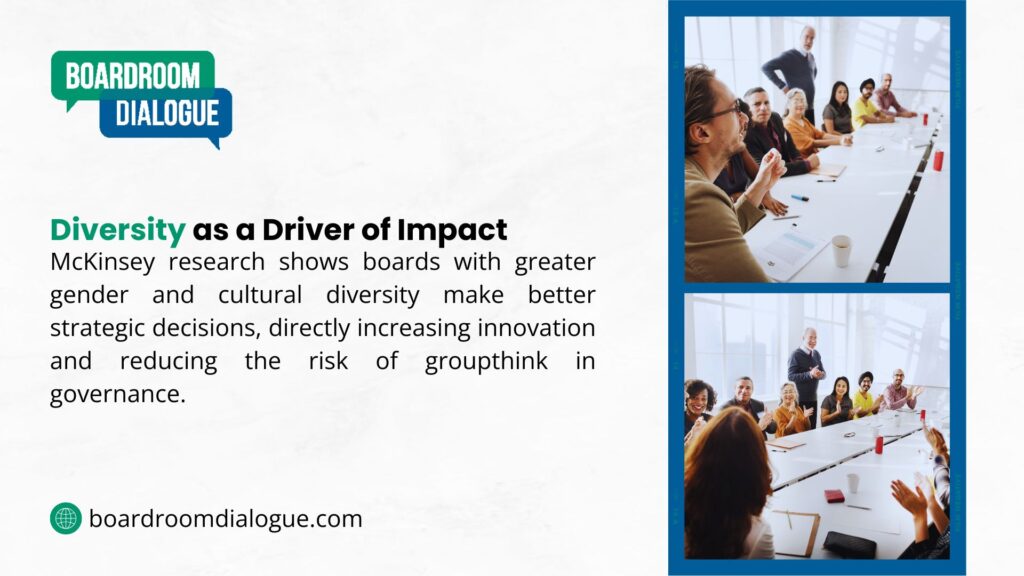
Board Dynamics How well do directors work together? Is there open debate and honest challenge, or does groupthink dominate? Do all voices get heard or do strong personalities steamroll discussions?
Strategic Contribution Is your board actually adding value to strategic decisions, or just approving management recommendations? Do you help shape direction or just react to proposals?
Risk Oversight How effective is your risk management oversight? Do you understand the major risks facing the organization and have appropriate monitoring in place?
The review should give you a clear picture of strengths and weaknesses in each area, not just a generic “everything’s fine” conclusion.
Also Read: Strategies For Improving Board Effectiveness
7 Steps For You to Run an Effective Board Review
If you want to run an effective board review, you will have to require planning and commitment, so here are 7 steps you can follow:
- Be Clear With Your Goals
First, be clear about what you want the review to achieve because some boards use it to make small improvements and some others look for big changes. You might focus on one area, like decision-making, or take a full look at how the board works.
- Choose The Type Of Review That Fits Your Goals
Pick the type of review that fits your goals. You can do a self-assessment, bring in an outside reviewer, or combine both. Think about your budget, how sensitive the issues might be, and how much objectivity you want in the feedback.
- Design the Assessment
Create surveys, interview guides, or other tools that will gather the information you need. Good assessment tools ask specific, actionable questions rather than vague “rate your satisfaction” queries.
- Get Some Feedbacks
Get feedback from directors, senior management, and potentially other stakeholders. You can do this by using multiple methods which can be surveys, interviews or meeting observations.
- Analyze Results
Look for patterns in the feedback. Where do multiple sources point to the same issues? What are the root causes behind surface-level problems?
- Develop Action Plans
Turn findings into specific, actionable recommendations with clear ownership and timelines. Vague suggestions like “improve communication” don’t lead to change.
- Track Progress
Set up mechanisms to monitor whether improvements are actually happening. Schedule follow-up reviews to assess progress and identify new issues.
The whole process typically takes 8-12 weeks from start to finish, depending on the depth of review and number of participants.
Common Review Findings and What They Mean
Most board effectiveness reviews uncover similar patterns. Here are the issues that show up repeatedly and what they tell you about your governance.
- “Board meetings focus too much on reporting”
This usually means your agenda design needs work. You’re spending time reviewing historical information instead of debating future decisions. The fix is restructuring meetings to prioritize forward-looking discussion.
- “Directors don’t challenge management enough”
This can signal several problems: directors don’t have enough information to ask tough questions, the board culture discourages dissent, or directors lack confidence in their expertise. The solution depends on the root cause.
- “Board composition doesn’t match our strategy”
Your board was built for yesterday’s challenges, not tomorrow’s opportunities. This often happens gradually as business needs evolve but board composition stays static. It requires proactive succession planning.
- “Communication between board and management is poor”
This shows up as frustration on both sides. Management feels micromanaged or unsupported. Directors feel kept in the dark or given irrelevant information. Better role definition and communication protocols can fix this.
- “Board discussions lack depth”
Surface-level conversations suggest either time pressure, poor preparation, or cultural issues. Directors might not be doing their homework, or meetings might be structured to discourage real debate.
Making Review Results Stick
The biggest waste of time is conducting a thorough review and then letting the findings sit on a shelf. Here’s how to turn review results into actual improvement.
Prioritize ruthlessly. Don’t try to fix everything at once. Pick 2-3 areas that will have the biggest impact and focus there first.
Get specific about actions. “Improve board dynamics” isn’t actionable. “Implement structured discussion formats for major decisions” is something you can actually do.
Assign ownership. Someone needs to be responsible for each improvement initiative. Usually that’s the board chair or governance committee chair.
Set deadlines. Without timelines, improvement plans become wishful thinking. Set realistic but firm deadlines for key milestones.
Check progress regularly. Put review follow-up on the board agenda every quarter. Are improvements happening? Do you need to adjust the plan?
Celebrate wins. When you make progress, acknowledge it. This builds momentum for continued improvement.
| Improvement Area | Example Action | Owner | Timeline |
| Meeting effectiveness | Redesign agenda template to allocate 60% time to strategy | Board Chair | 30 days |
| Information quality | Reduce board pack to 25 pages max, add executive summaries | Company Secretary | 60 days |
| Skills assessment | Complete skills matrix and identify 2 priority gaps | Nominations Committee | 90 days |
| Board dynamics | Implement round-robin input for major decisions | Board Chair | Immediate |
Get Professional Help When You Need It
Some boards can handle effectiveness reviews internally. Others need outside help to get honest feedback and objective analysis.
Consider external support when:
- Internal politics make honest assessment impossible
- You’re dealing with serious performance or relationship issues
- The board lacks experience with review processes
- You want benchmarking against industry best practices
- Stakeholders are questioning board effectiveness
External reviewers bring objectivity, specialized expertise, and credibility that can be hard to achieve internally. They can ask difficult questions, challenge assumptions, and provide confidential channels for sensitive feedback.
The investment in professional review support usually pays for itself through better governance and avoided problems.
Build Exceptional Board Effectiveness That Fits Your Organization’s Needs!
If you want to conduct a board effectiveness review that is strong and delivers real insights and actionable improvements, the best move is working with experienced governance professionals who handle board assessments daily.
Boardroom Dialogue has earned the trust of corporate boards through years of specialized review work. We have helped boards across the UK and Europe identify governance gaps, develop practical improvement plans, and implement changes that stick.
We handle everything from comprehensive effectiveness reviews and objective analysis to action planning and implementation support. We work with corporate boards, executive teams, and leadership bodies seeking honest assessment and meaningful governance improvement.
Get your free board effectiveness consultation to discuss your board’s specific situation and explore how a professional review can strengthen your governance and strategic impact.
Frequently Asked Questions (FAQ) From Board Leaders
- How often should we do a board effectiveness review?
Most boards benefit from annual self-assessments with deeper external reviews every 2-3 years. But if you’re going through major changes—new CEO, strategic shift, board composition changes—you might need reviews more frequently. The key is regular check-ins, not just crisis-driven assessments.
- What’s the difference between a board evaluation and an effectiveness review?
Board evaluations often focus on compliance and basic performance metrics. Effectiveness reviews go deeper to examine whether the board actually adds strategic value. Think evaluation = did we do our job, effectiveness review = did we do our job well and make a real difference.
- How do you get directors to give honest feedback in a review?
Use anonymous surveys for sensitive topics, bring in external facilitators for difficult conversations, and create safe spaces where directors can speak candidly. The chair needs to model openness to feedback and make it clear that the goal is improvement, not blame.
- What happens if the review finds serious problems?
Don’t panic—most boards have improvement opportunities. Focus on the 2-3 most critical issues first. Get specific about what needs to change and who’s responsible. If you uncover major governance failures, consider getting external help to develop and implement solutions.